Exotropia (Outward Squint)
Exotropia is when the eye turns outward, away from the nose. Unlike inward squint, it usually comes and goes at first — which is exactly why it gets dismissed for so long.
The on-and-off stage is the important one
Most childhood exotropia starts off coming and going. The eyes are straight most of the day, and the drift shows up when the child is tired, unwell or staring into the distance.
Because the eyes look fine in the clinic and in most photos, families get told nothing is wrong.
At this stage the child still has depth perception, and the aim is to protect it. Once the eye is out all the time, that is usually already lost. Surgery can still straighten the eyes, but it cannot always bring depth perception back.
So the real question is not whether the eye drifts. It is how well the child can control it, and whether that control is holding or slipping.
Signs parents notice
This is usually spotted at home long before any clinic visit — and often dismissed, because the eyes look perfectly straight most of the time.
The main types
- Comes and goes. The most common type in children. How well the child controls it is what we measure at every visit.
- There all the time. Either from the start, or after the on-and-off type has worsened.
- Caused by poor vision in one eye. An eye that cannot see well stops joining in and drifts out. The vision problem has to be treated too.
- Eyes struggle to turn inward for reading. Causes eye strain, blurring and losing your place on the page. This type responds well to exercises.
- After previous squint surgery for an inward turn.
Treatment
- Glasses first. Uncorrected short sight can make the drifting worse.
- Eye exercises. Genuinely useful when the eyes struggle to turn inward. Not a substitute for surgery in large or constant squints.
- Part-time patching in children, to stop the brain ignoring the drifting eye.
- Prisms for smaller turns and for adults with symptoms.
- Surgery when control is slipping, the eye is out all the time, or the turn is too large for the options above.
When to operate is a judgement based on control and how the eyes work together — not just on how big the turn is.
Exotropia: before & after
Exotropia cases treated by Dr. Shah — children and adults — showing the eyes before and after squint surgery.
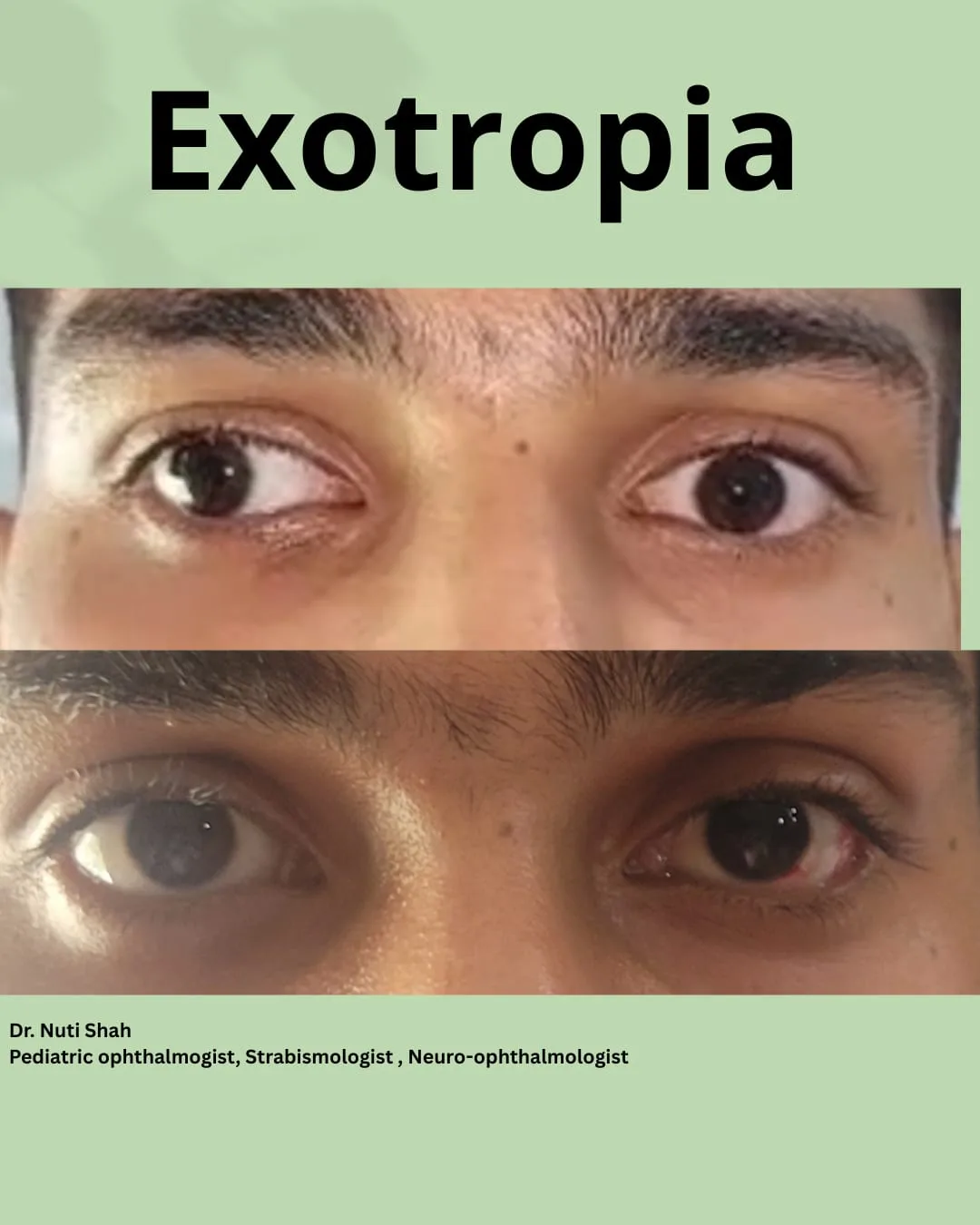
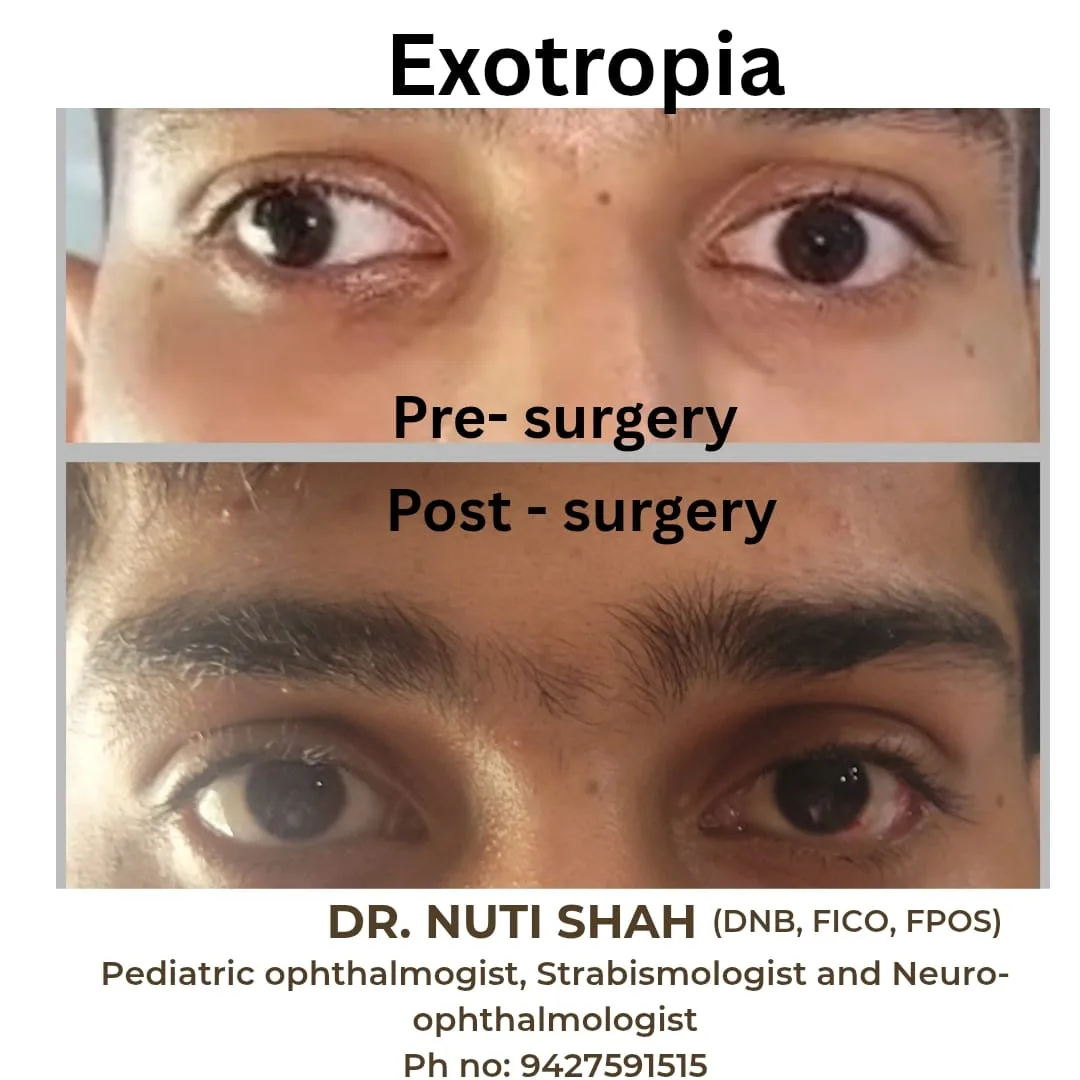
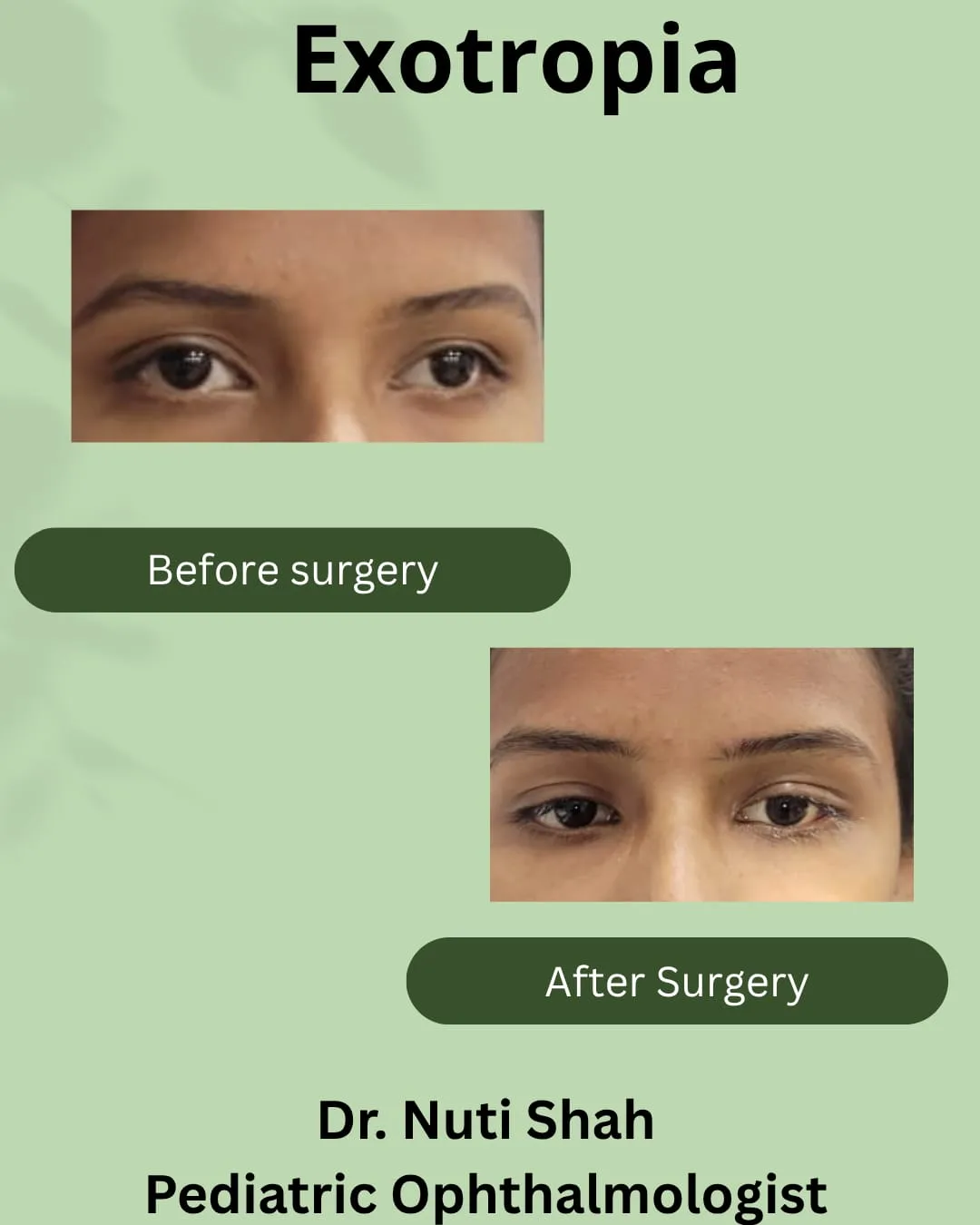
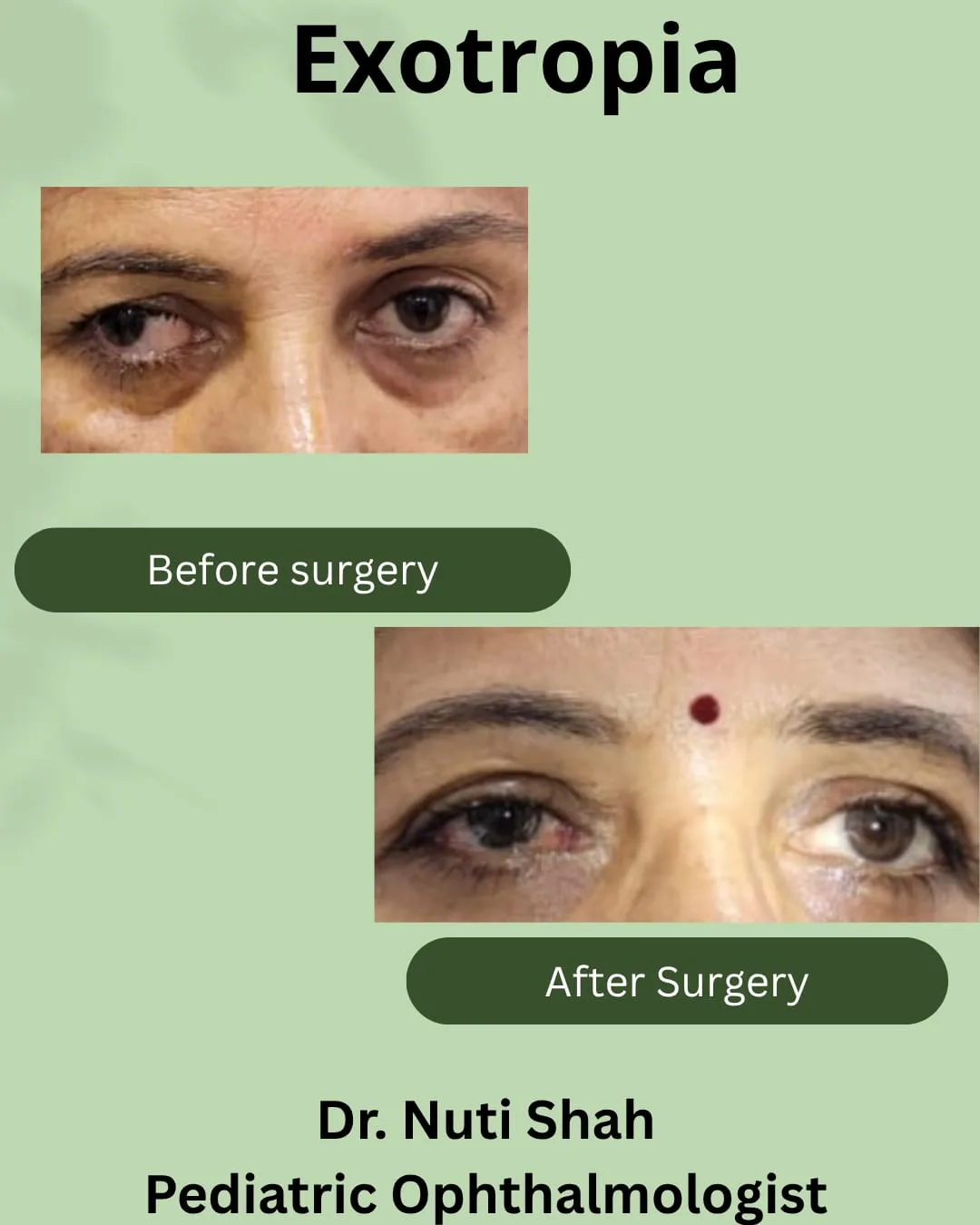
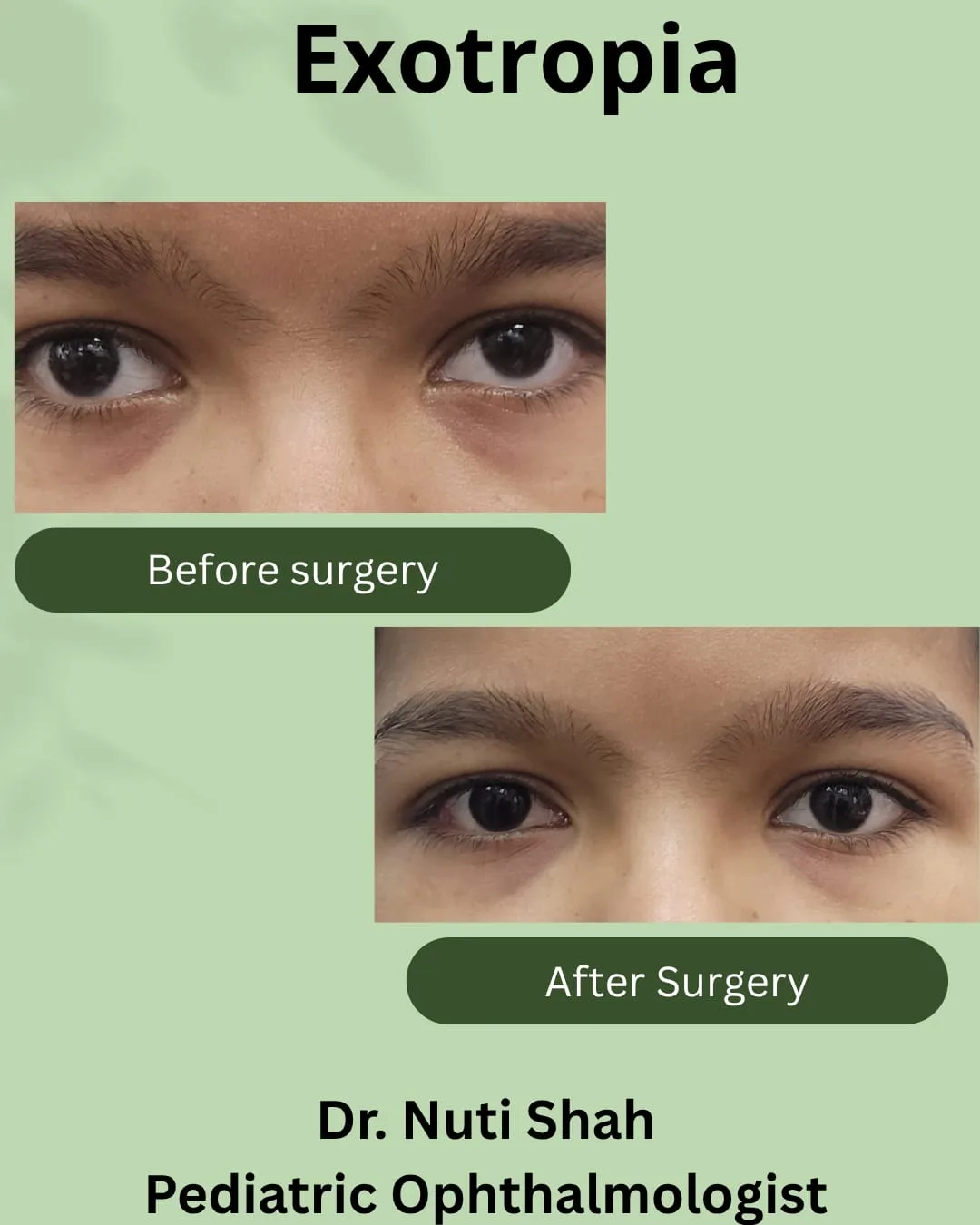
⚕️ Shared with informed consent for educational purposes.See all case studies →
Frequently Asked Questions
My child's eye only drifts out sometimes. Does it still need treatment?
Yes, it still needs checking. An eye that drifts out only when the child is tired, unwell or staring into the distance is the most common type in children.
What matters is how often it happens and whether the child can still pull the eye back. We measure that over time. Many children with good control are just watched. But if it is happening more often, lasting longer, or starting to show up for near work too, that is when we step in.
Can exotropia be treated without surgery?
Sometimes. We correct any glasses power first, since uncorrected short sight can make the drifting worse. Eye exercises genuinely help when the problem is the eyes struggling to turn inward for reading.
But a large or constant outward turn will not be fixed by exercises. Carrying on with them in that situation just delays proper treatment.
Why does my child close one eye in bright sunlight?
This is one of the clearest signs of an outward squint, and usually the first thing parents notice.
Bright light breaks the effort that was holding the two eyes together. The eye drifts out, and closing it is how the child avoids the confusion. It is worth mentioning to us — it points straight to the diagnosis.
Can adults have exotropia treated?
Yes. A childhood squint that has become constant in adulthood can be straightened with surgery, and adults usually report less eye strain and tiredness afterwards.
Some adults also get back some depth perception. A new outward turn appearing in adulthood is different and should be checked quickly.
Will my child grow out of it?
Usually not. Control more often gets slowly worse than better.
Watching and waiting is fine as a plan with proper check-ups. It is not fine as a way of avoiding getting it looked at. The point of regular checks is to catch any slide while the eyes are still working together.
Related
Esotropia (Inward Squint)
The opposite — when the eye turns in instead.
Read moreSquint Surgery
What happens, cost, recovery and results.
Read moreSquint in Adults
Straightening a long-standing outward squint in adulthood.
Read moreBefore & After Results
Real exotropia results in children and adults.
Read moreContact & Location
Sat: 10:00 AM – 2:00 PM · Sun: Closed
Get an Exotropia Check
Early detection saves sight. Whether it's a routine check-up or a specific concern, we're here to help.